Defining play seems simple, but it turns out to be rather complex. That’s because play can mean different things to different people. In a chapter I wrote in 2021, I noted that “most early childhood experts agree that play is any self-directed activity, freely chosen by the person engaging in it, without any external rules, and brings about joy or personal fulfillment” (p. 50). It is much easier to define play by characteristics, because play can look different even among a group of children playing together.
At the Play Science Institute, we define play based on four characteristics: (1) Play is self-directed; (2) Play is enjoyable; (3) Play is a biological necessity; and (4) Play is the right of all children. The first two characteristics align with the definition I gave in 2021. But I added the third and fourth characteristics to show that play is both a need and a right. Let’s explore these more.
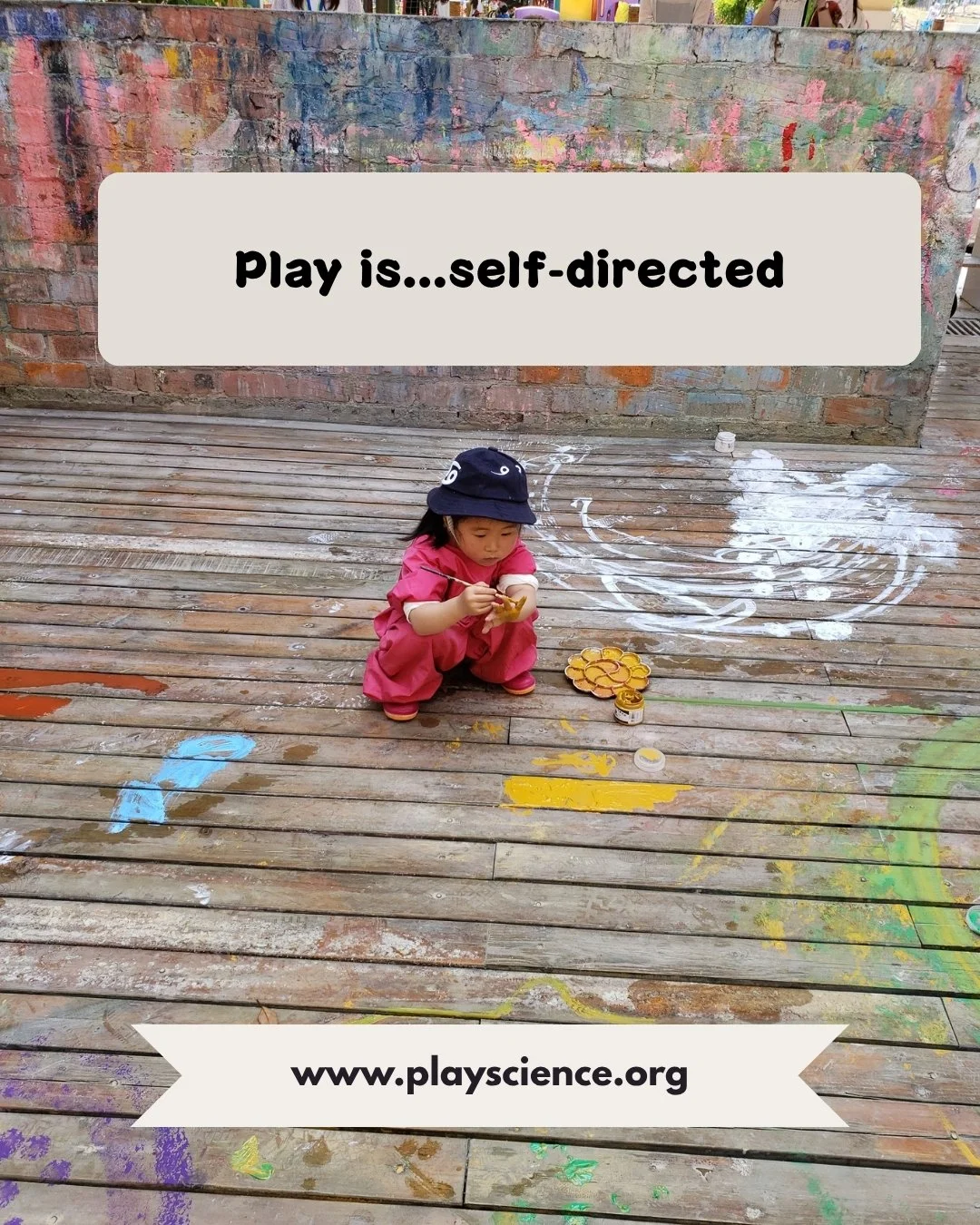
Play is self-directed.
When something is self-directed, it means it is freely chosen by the person engaging in it. Of course, the environment and materials may affect a person’s ability to engage in play, but if it is their choice to use those materials any way they want, then that play is self-directed. This matters because the new push for play-based learning can lead us to believe that an activity designed by a teacher that includes some playful elements is play. But it can’t be play if the child isn't self-directing it. A child doing an activity designed by the teacher is not engaging in play. They are completing a teacher-led or guided activity. Even if it is fun and includes playful elements like movement and singing, that doesn’t make it play. Playful and play are not the same. At the Play Science Institute, we advocate for play-led early childhood spaces where children are free to play in any activity of their choice, using any materials they have access to.
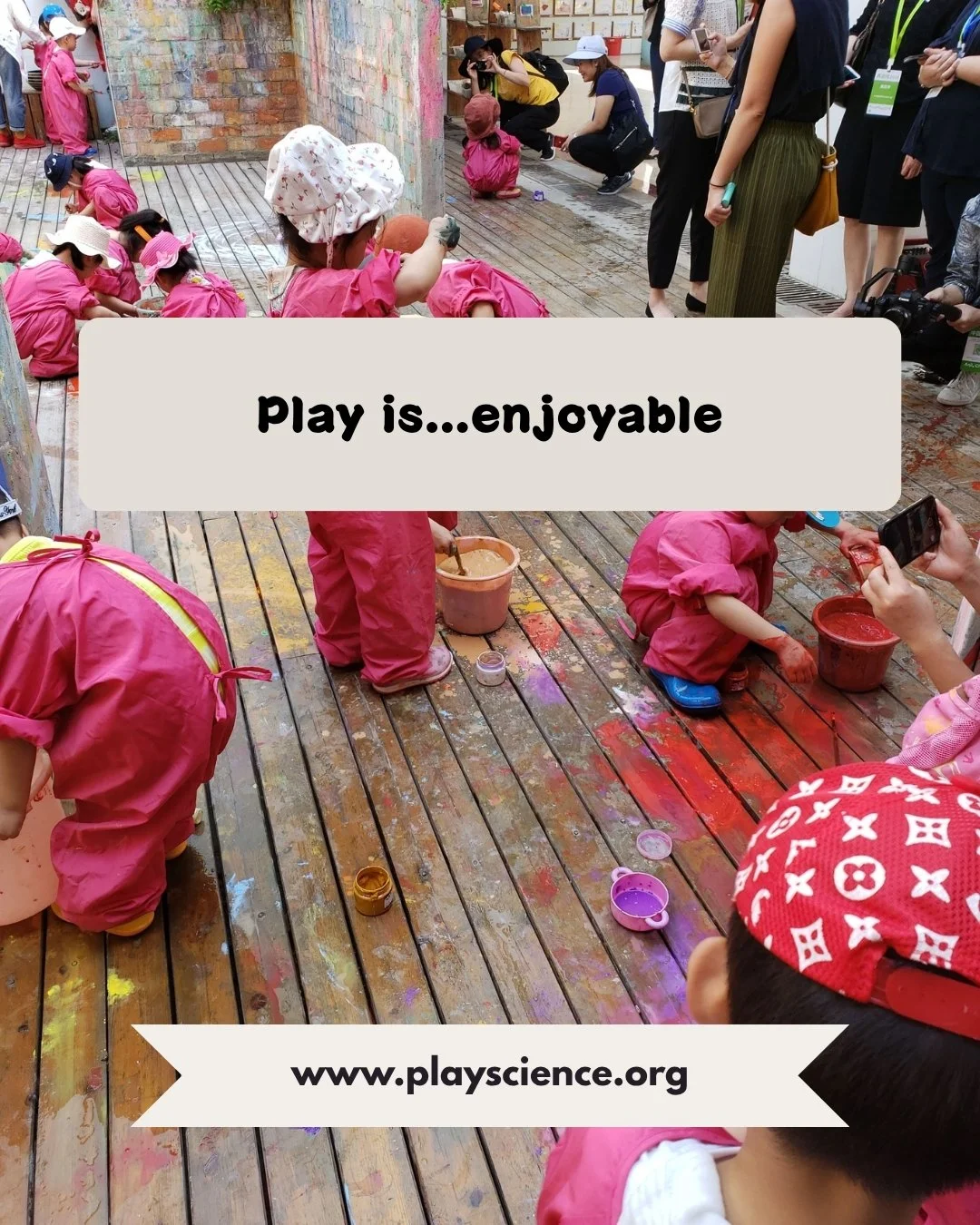
Play is enjoyable.
If a child isn't doing something they find pleasant, it can’t be play. Play is something that a person does because they want to and it brings them joy, pleasure, or self-fulfillment. A child can enjoy guided play or teacher-led playful activities, and that doesn’t make it play. But if a child is “playing” and they are miserable, I would question whether that is play. A child can be bored during play time and even frustrated and angry during play, but these are usually temporary states of being that change as the child engages in play. Overall, time spent playing is time spent mostly in a state of joy and happiness.
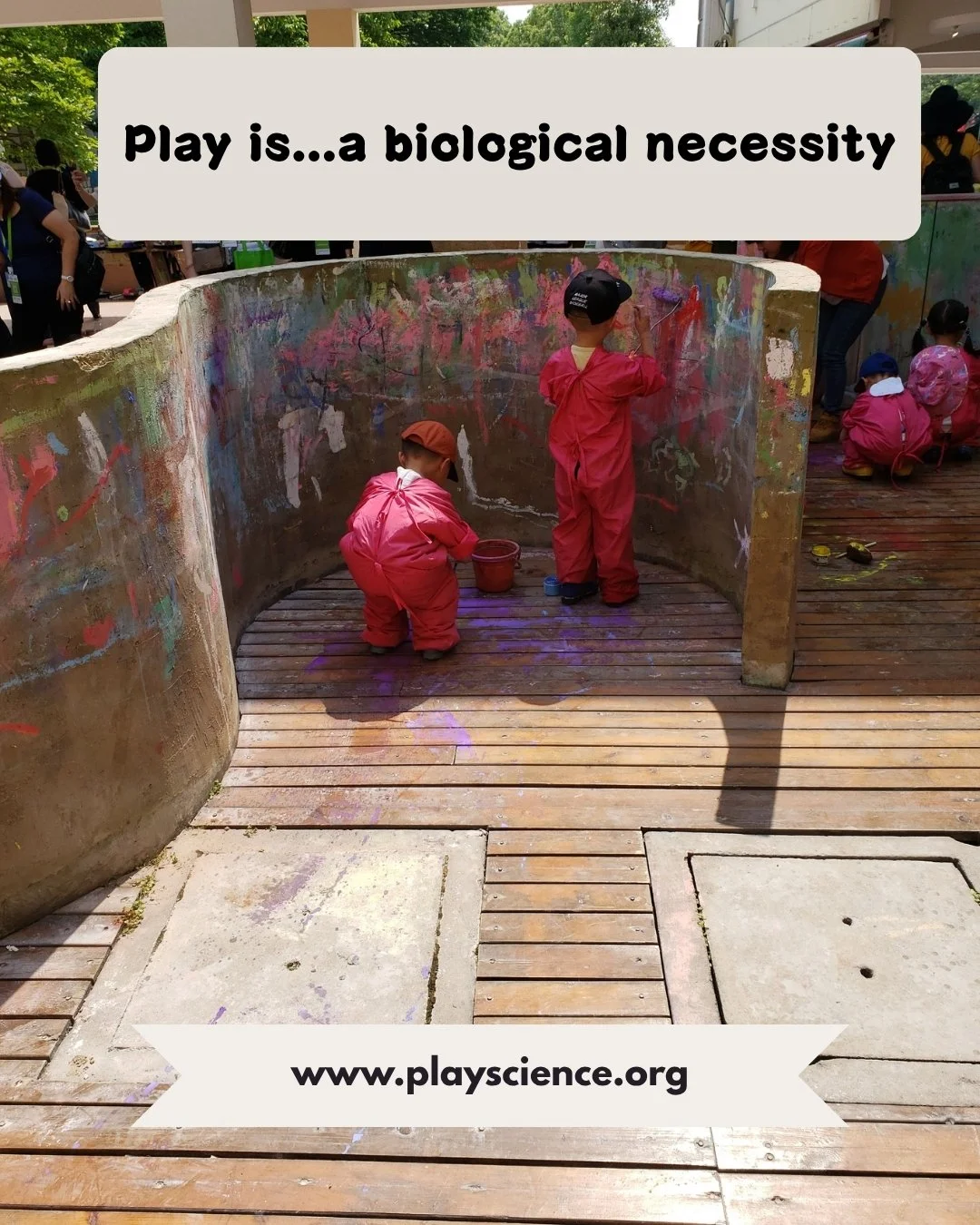
Play is a biological necessity.
I have to thank Peter Gray for helping me to understand how the need to play is a biological drive. In his book Free to Learn, he notes how all mammals are curious, playful, and sociable, though humans possess these traits in ways that support our needs as advanced learners. The drive to play is biological because it stems from a natural drive to practice new skills and use them in new ways. Curiosity drives children to acquire new knowledge and greater understanding, while play is how they master newly acquired skills. When children are first presented with something novel, their curiosity leads them to explore it. But through play, they become experts at using the novel item. When describing how a child shifts from curiously exploring a new object to repeatedly acting on it or playing with it, Dr. Gray notes a shift from an initially serious facial expression to one that is more relaxed, smiling, or expressing enjoyment.
Play as a biological necessity is an important characteristic, because all too often play is seen as a break from “real learning” or a reward for complying with adult expectations. But if play is seen as something frivolous, then it is something we easily take for granted. When play is viewed as necessary to child development, like food and water, then play is valued, respected, and protected.
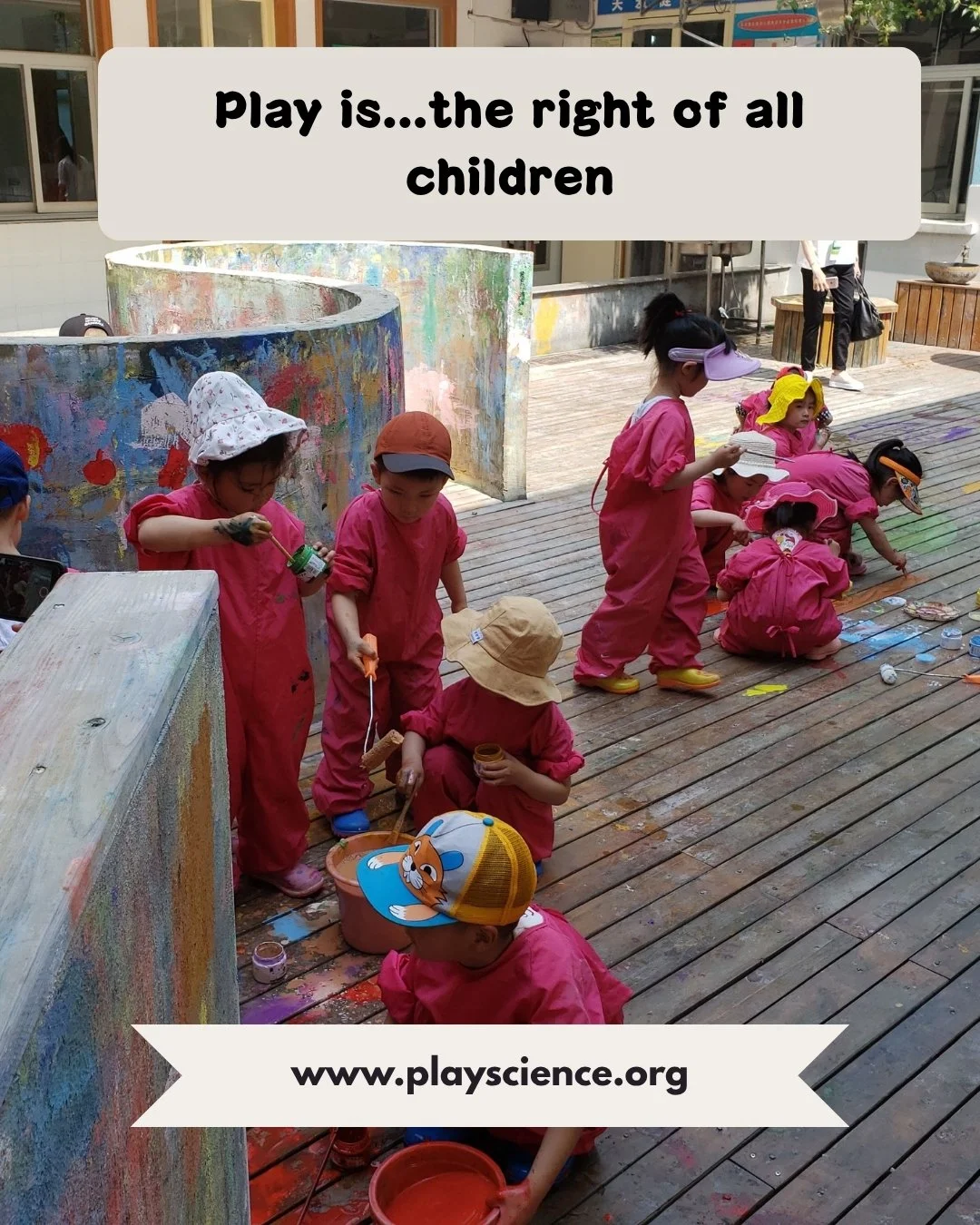
Play is the right of all children.
Even though the US has not signed on to the United Nations Convention on the Rights of the Child, play is still the right of all children. Hell, it’s the right of all people, regardless of age. Because guess what…adults play too. And if they don’t, they should. Recognizing play as biologically driven helps to ensure access to time and space to play is abundant. Honoring play as a right ensures that play remains a vital part of our lives. Rights are not something that others can take away from us. And play is not something that we should deny to children.
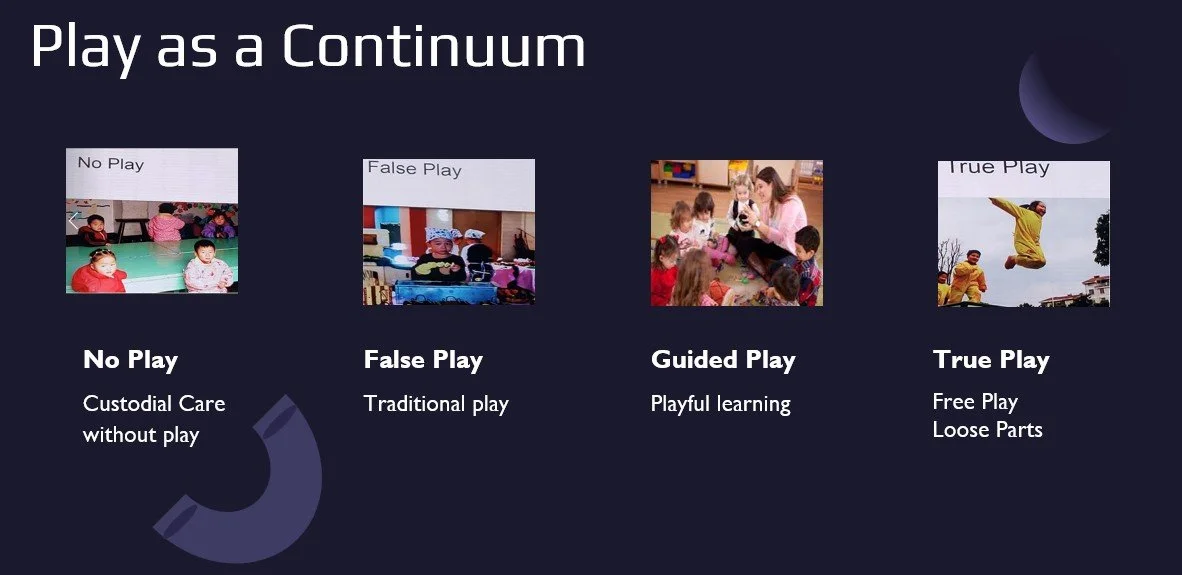
In that same chapter I wrote, “I view play on a continuum from no play (children have no time or space to play) to true play (children have uninterrupted time to select how and what they do with open-ended materials)” (p. 51). At the Play Science Institute, we work to move teachers along this continuum to create environments that are filled with true play. When I worked with ten teachers on a research project exploring the teacher's role in play-led environments, I found most were in the middle, or slightly closer to the no-play side. They acknowledged that their students had 30-60 minutes of play each day and that this was sufficient. Three of those teachers implemented Playlab, an intervention that included 60-120 minutes of free play every day. By the end of the intervention, those teachers came to see the value in leading with play and moved down the continuum to where they believed children should have hours of true play every day. These were kindergarten and first-grade teachers working in a public school.
What other characteristics of play do you use to define play? Where are you on the play continuum? If you want support leading with play and creating true play environments, check out the Play Science Institute All About Play Mini-Reflective Courses and Play Pedagogy: Theory and Practice Immersion.