What is Play Science?
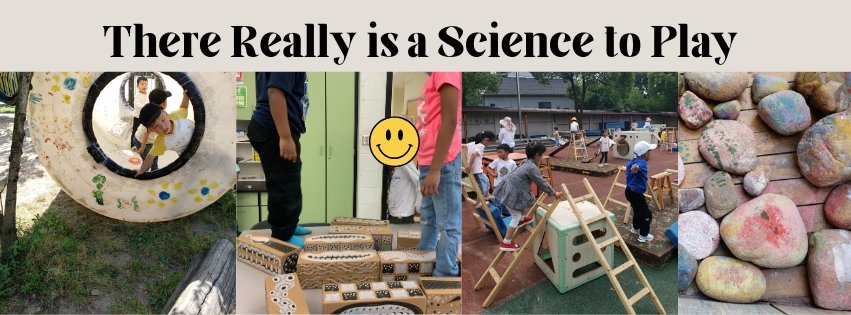
One hallmark of a rational society is basing our knowledge on what we can prove. The scientific method provides evidence for our theories and ideas. As a result, we demand empirical research over personal opinion or theory. Though some scholars and researchers have pushed for a move away from positivist orientations that believe knowledge can only come from scientific evidence, this has not changed our reliance on science to establish what we know and often what we believe.
In education, we study and document how children learn, the impact of different pedagogies on learning, what students learn from the curriculum, and many factors that affect development, learning, and teaching. Most courses you take to become a teacher are based on what we have learned from a scientific study of education. Whether it’s Psychology of Learners, Theories of Child Development, or Methods for Teaching Reading, these courses are built on scientific theories relevant to their fields. Pre-service teachers study these theories and use this knowledge to craft their philosophy of education, which guides the pedagogies they will choose to enact as in-service teachers.
Given our heavy reliance on science, we often add this word to something we want taken seriously or to demonstrate that the topic is supported by evidence. It implies there is systematic, evidence-based study and a specialized body of knowledge dedicated to the specific field or phenomenon. Thus, we get the “science of happiness,” the “science of running,” and even the “science of shopping” as declarations that these topics aren't just based on personal feelings, but are backed by science.
Many of you have probably heard of the “science of reading,” the “science of writing,” or even the “science of learning.” These terms should mean that a body of research documents how we learn to read and write, and how we learn to learn. But for many teachers, these terms imply a single way to teach reading, writing, and learning, and they often come with a shiny new curriculum that all teachers must learn and use if their district has signed on to the new science of… program. Sometimes the new science of program is used to dismiss or challenge practices that are no longer deemed favorable or relevant. Take the “science of reading,” which has been required in 43 states plus the District of Columbia through legislation that mandates the use of “evidence-based reading instruction”. The science of reading movement was spawned in large part by documentary reporting claiming that teachers were not learning how to teach reading properly, leaving many children unable to learn to read. In Sold a Story, the culprit was the use of faulty approaches to teaching reading, such as whole language and three-cueing, which the science of reading seeks to eliminate. The idea is that if teachers follow the science of reading, all children will learn to read. Now many of you are attending trainings and professional development on the science of reading, and you’re expected to use this approach to the exclusion of all others.
When Maurice Sykes first approached me with his idea for a science of play institute, I was a bit skeptical. After learning that the science of reading had been mandated through state legislation, I did not want the field of play to follow the same path. I feared the science of play would lead to a Structured Play Curriculum with objectives, goals, and guides for teachers to facilitate structured play sessions. And that play would be valued only if it led to measurable outcomes that added to the body of evidence needed for acceptance. This is not what I want play to become.
But the more I thought about it, the more I realized there really is a science of play. There is a vast body of literature that documents the benefits of play.
Play science is the collection of evidence we have on how play impacts development, learning, and well-being.
We need play science because, in education, play often gets a bad rap. For some, play is a bad word; for others, it is a trivial thing that children do when they are bored or taking a break. Some see play as something adults must guide or lead to have any real value or meaning. Others see play as something that has to be controlled during recess, before or after school, or even at a public park.
However, a growing contingent of early childhood educators, caregivers, scholars, and advocates understands and values play science. We know that play is biologically driven and imperative for our neurological and social development. We recognize that play is a right of all children and must be protected. We understand that play leads development, is learning, and fosters well-being.
Play science is not a one-size-fits-all approach to child-led free play. It is not a scripted curriculum that can be packaged and sold to educators who must implement it with fidelity. Play science is not a new trend or buzzword. Play science is what we know about play, based on a body of research documenting its value and our experience leading with play.
Though my work has always been rooted in early childhood education, play impacts the lifespan. Adults need to play, and many play researchers have documented the benefits of a lifelong commitment to play. At the Play Science Institute, our focus is on the impact of play from birth to age 10.
Our Principles of Play Science summarize three key aspects of play science: 1) play leads development; 2) play IS learning; and 3) play fosters well-being.
We aim to share this knowledge with early childhood educators, administrators, and legislators so all children have the time, space, and permission to engage deeply in uninterrupted, child-led free play. We believe that play pedagogy is needed in the early years to ensure children have a strong foundation on which academic learning can build. We also want to prepare teachers to conduct play action research so we can continue documenting the benefits of play.
Though we deeply believe in science, we must remember that science can justify atrocities. Eugenics was once a major scientific theory that was used to sterilize groups of people deemed inferior. Scientific racism was used to justify the kidnapping and enslavement of African people for centuries. Before these ideas were discredited, scientists backed them and used them to push policies and practices that harmed millions of people. Thus, we must temper our reliance on science with the recognition that science is driven by people, who can make mistakes and cause harm.
After Maurice Sykes passed away, I thought long and hard about his dream for a science of play institute and my belief in the power of play. I realized that, despite my valid concerns that others could manipulate our vision into something neither of us wanted, we need to share what we know about play science with as many people as we can. So I launched the Play Science Institute not only to implement Maurice’s final project but also to create a space for others to learn the principles of play science.
Fortunately, play can't be packaged and sold. Play is something we all do, but it is often even difficult to define. And though there is a huge market for toys, games, and apps, play doesn’t require anything tangible. This makes play hard to commodify, which may be why it’s not widely used in schools. But this doesn’t mean others aren’t trying and won’t continue trying to turn play into a product. At the Play Science Institute, we will not only spread the principles of play science but also protect play from standardization and marketization.
We invite you to join us on our journey to share play science and protect play.
